Solutions Category: Electronics & Accessories

Custom Electronics

Custom Electronics

AdvR designs, develops, and manufactures solution-focused electronic control products for customers in the healthcare, energy, defense, and scientific instrumentation sectors. With expertise in thermal management and sensor control, we offer everything from off-the-shelf units to fully customized systems. Our custom temperature-control solutions deliver exceptional stability to 0.001 °C, compact form factors, high reliability, low noise, and easy operation.

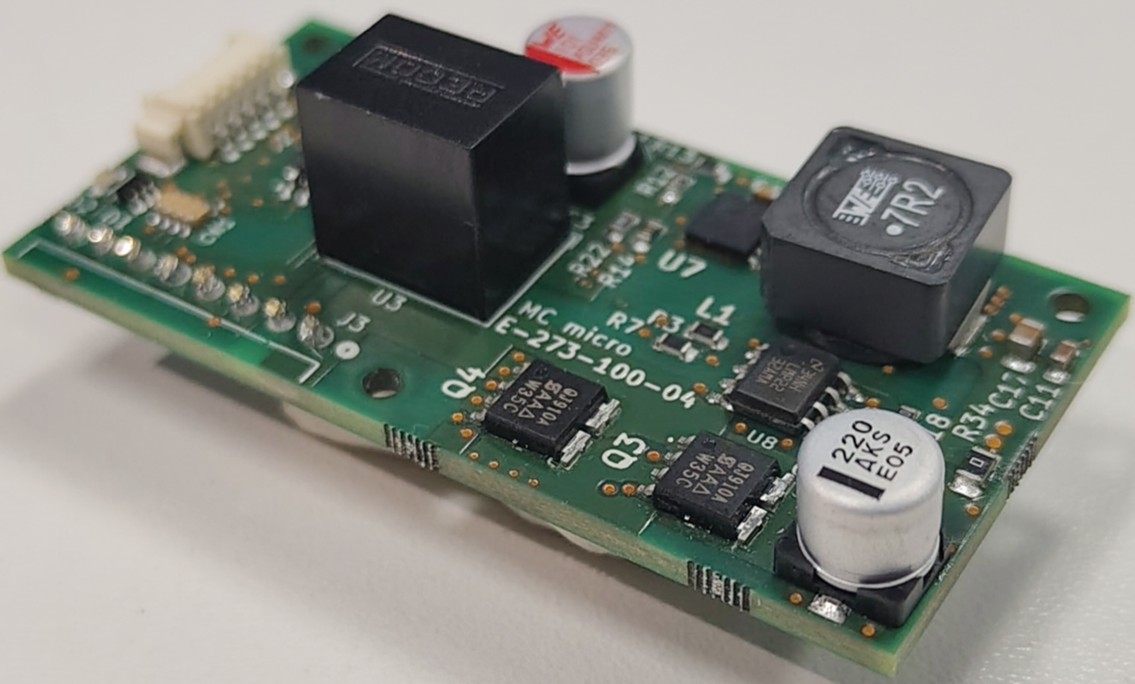
Custom made electronic circuit board.

We cover all wavelengths from

350nm

6um

Contact AdvR to discuss off-the-shelf or custom temperature control systems engineered for stability, performance, and seamless integration.

Purple question mark in purple circle.

Check out or FAQs for further support

Check out our FAQs for answers to common questions and guidance on products, setup, and support.

Ovens & Accessories

Oven solutions

Covesion oven series are specially designed to provide secure mounting and robust thermal stability for PPLN crystals. We offer different oven sizes PV10, PV20, PV40 and PV50 to use with different crystal lengths from 0.3mm to 50mm. Our ovens are fully insulated construction using high performance plastic material, lowering external temperature influence and minimal air currents.

Black PPLN oven with Covesion engraved onto it, representing Oven Solutions.

Clip kits solutions

Covesion offers a variety of clip kits in different sizes designed to securely mount PPLN and PPKTP crystals and waveguides. These mounted chips can be easily aligned using pin-aligned mounting within the Covesion oven series. Covesion clip kits provide secure mounting for crystal size from 0.3mm to 50mm long, up to 10mm wide and 2mm thick. They are simple pin-aligned mounting in PPLN ovens. They have a uniform temperature distribution to ensure the crystal is heated evenly.

Various gold clip kits, representing Clip Kit Solutions.

Free Space Mounting Solutions

Covesion provides several free-space mounting solutions, including post-mount adapters, flexure stage adapters, and oven-free mounting solutions. This comprehensive range of mounting options ensures compatibility with diverse experimental setups and enhances the ease of integration into various optical systems.

Selection of varying, black mounting solutions, representing Free Space Mounting Solutions.

We cover all wavelengths from

390nm

6um

Explore Covesion’s versatile clip kits and free-space mounting solutions for seamless integration of PPLN and PPKTP crystals into your optical systems. Enhance your setup today!

Download our full product catalog

Access Covesion comprehensive catalogue for detailed information on products, specifications, and solutions. Download now to explore our offerings.

* Email address invalid or missing

Request successful

Check your email for the product catalog

Sorry, the inquiry was not sent

There seems to be an issue with your form submission. Please try again, if this error persists contact info@advr-inc.com

What our customers say about us

  • Dr. Félix Bussières

    ID Quantique, VP Research & Technology

  • Dr Jefferson Florez Gutierrez

    Imperial College London, Research Assistant

  • Dr. Adetunmise Dada

    University of Glasgow, Lecturer in Optics School of Physics and Astronomy

  • Jeff Thompson

    Princeton University, Associate Professor of Electrical and Computer Engineering

As Covesion’s products are so well documented, we were able to easily select the waveguide we needed and discussions with Covesion’s team were helpful and clear. The product works well and is used regularly by the team here at IDQ.

One of the main reasons we purchased PPLN products from Covesion is that they provided all the information we needed for understanding the crystal, and the sales team at Covesion made the purchase and the subsequent use of the product very simple. The company stands out because their poling technique is so good.

The customer service from Covesion has always been excellent. We have a great rapport with Corin (ProfessorCorin Gawith, CTO, Covesion) and the team, and their knowledge is invaluable. I have had occasion to use Covesion crystals twice during my research at The University of Glasgow and the turnaround for the custom products was very quick, meaning the research could continue without delay.

Specifically with regards to our area of interest, the PPLN crystals are periodically poled, and the period of poling needs to be optimised to ensure the best performance of the source, enhancing the efficiency of the generation. Covesion gave us various options rather than just one specific period for the poling. For example, in one of the devices there were different groups of poling periods and that allowed us to optimise for best performance and find the configuration that worked the best.

Compared to some other nonlinear mediums, Covesion’s PPLN product provides much higher nonlinear coefficient and good optical qualities that are suitable for high power laser applications.

Covesion has good reputation in the community, they provide good quality products as well as excellent technical support for the materials and technologies used in our laser system. They offer a range of standard in-stock products, together with providing bespoke products and customised services.

Green question mark in a circle, representing FAQs.

Check out or FAQs for further support

Find answers to common questions instantly. Dive into our FAQs for quick solutions to your inquiries. Get informed today!

Temperature Controllers

Benchtop Multi-Controller

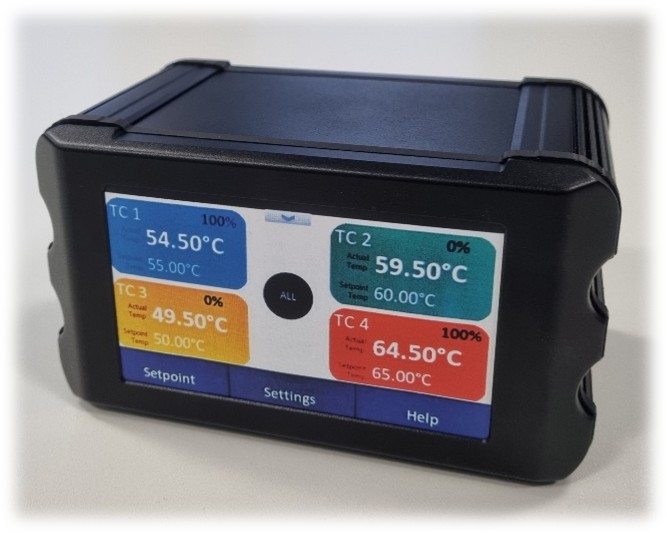
The Covesion multi-channel temperature controller is a benchtop unit engineered for resistive heater and TEC-based devices, including PPLN ovens and waveguide components. Supporting up to four independent channels, it features an intuitive touchscreen interface, ±0.01°C stability, USB connectivity, and automatic device recognition for seamless plug-and-play operation, delivering precise, dependable thermal control and consistent performance across a range of applications.

Benchtop temperature controller

Mini Temperature Controller

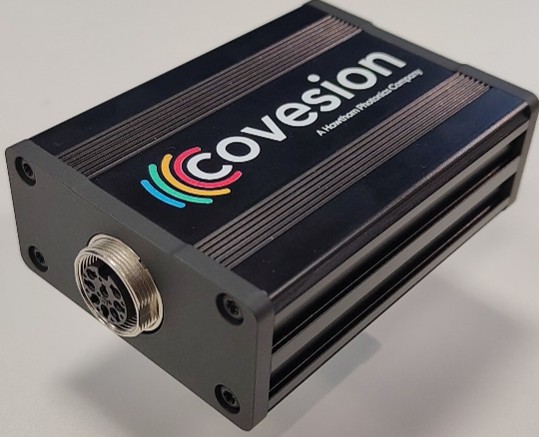
Covesion’s Mini Temperature Controller is a compact unit developed for PPLN ovens and waveguide modules. It provides precise thermal regulation with ±0.01°C stability and 0.01°C resolution. Compatible with both resistive heating and TEC configurations, it includes USB PC connectivity and user-friendly software, making it well suited to integrated systems that demand accurate, reliable, and space-efficient temperature control.

Mini temperature controller

Micro Temperature Controller

Covesion’s Micro temperature controllers are compact PCBA solutions designed for straightforward OEM integration with PPLN ovens and waveguide modules. Offering ±0.01°C stability and 0.01°C resolution, they deliver precise thermal control. With serial connectivity, adaptable interface options, and dependable performance, they support accurate and stable temperature management in demanding photonics environments.

Micro T Temperature Controller

We cover all wavelengths from

350nm

6um

Contact AdvR to discuss off-the-shelf or custom temperature control systems engineered for stability, performance, and seamless integration.

Purple question mark in purple circle.

Check out or FAQs for further support

Check out our FAQs for answers to common questions and guidance on products, setup, and support.

Welcoming Walter Bevers to the Hawthorn Photonics Group

Walter joins us at an exciting stage in our development as we continue to strengthen collaboration across our three specialist businesses, Covesion in the UK, AdvR in the United States and Radiantis in Spain. His appointment marks an important step in bringing our commercial teams together, allowing us to offer customers a connected and coordinated experience while building on the technical expertise that has made each company successful.

As Vice President of Sales, Walter will lead our global sales organization, developing a unified commercial strategy across the Hawthorn Photonics group. He will oversee sales activities across our established markets, including defense, aerospace and scientific instrumentation, while helping us expand our presence in emerging areas such as quantum technologies.

Working closely with our engineering, scientific and marketing teams, Walter will ensure we continue to provide customers with photonics solutions that meet increasingly complex technical requirements. He will also lead the development of common sales processes, reporting systems and commercial best practice to support the group’s continued growth.

Walter brings more than 30 years of experience in the photonics and laser industry. Most recently, he served as Senior Director of International Sales at MKS Instruments, where he was responsible for the global distribution channel for the Newport and Spectra-Physics brands and led direct sales teams across Europe. In addition, he held senior leadership positions at Newport Corporation and Spectra-Physics, building extensive experience in international sales, business development and team leadership. Earlier in his career, he worked in engineering and operations with Philips Lighting and Etap Lighting, giving him a strong technical foundation alongside his commercial expertise. Walter holds a Master’s degree in Physics from the University of Antwerp and a Bachelor’s degree in Business Management from Katholieke Hogeschool Leuven.

Commenting on Walter’s appointment, Mike Day, President of Hawthorn Photonics, said: “Walter has spent his career helping customers solve complex technical challenges and leading international sales organizations in our industry. He understands both the science

behind our technologies and the commercial realities of the markets we serve. As we continue to bring Covesion, AdvR and Radiantis closer together as one group, his experience, leadership and collaborative approach will be instrumental in strengthening our global sales organization and supporting the next phase of our growth. We are delighted to welcome Walter to the Hawthorn Photonics team.”

Share article

  • Twitter
  • LinkedIn

Download our full product catalog

Browse our range of stock and custom solutions tailored to your wavelength conversions.

* Email address invalid or missing

Request successful

Check your email for the product catalog

Sorry, the inquiry was not sent

There seems to be an issue with your form submission. Please try again, if this error persists contact info@advr-inc.com

Synchronous mode-locking of solid-state lasers

O. B. Jensen, A. K. Hansen, M. Chi, and P. Tidemand-Lichtenberg

Abstract

This Letter introduces a novel, to the best of our knowledge, method for achieving mode-locking and synchronization of mode-locked output pulses from two lasers. The proposed technique leverages parametric gain from difference frequency generation. Specifically, a Nd:YAG laser is mode-locked by single-pass mode-locked pulses from a mode-locked Ti:sapphire laser using an intracavity nonlinear crystal. When the continuous-wave laser is not actively pumped, the system functions as a synchronously pumped optical parametric oscillator. This novel approach has the potential to enable new devices, especially for pump-probe applications or for generation of mode-locked pulses in spectral regions where conventional mode-locked devices are typically not available.

Read paper in full

Share article

  • Twitter
  • LinkedIn

Unidirectional ring laser operation and tunable single-frequency emission

O. B. Jensen, M. Helmark, A. G. Urskov, and P. Tidemand-Lichtenberg

Abstract

In this Letter, a novel approach for unidirectional operation of a 1064 nm solid-state ring laser is demonstrated based on difference frequency mixing. Unidirectional operation is achieved exploiting the directional parametric gain from a single-pass diode laser, facilitated through a periodically poled LiNbO3 crystal. In addition to achieving unidirectional operation, the nonlinear process further enables the generation of single-frequency mid-infrared light. Using a single-pass tapered diode laser, tunable in the range from 780 to 815 nm, the generated mid-infrared signal covers the 2.9 to 3.5 µm range while optimizing the phase-match condition of the difference frequency generation process.

Read paper in full

Share article

  • Twitter
  • LinkedIn

Photon Pair Source based on PPLN-Waveguides for Entangled Two-Photon Absorption

Tobias Bernd Gäbler, Patrick Hendra, Nitish Jain, Markus Gräfe

Abstract

Fluorescence excitation by absorption of entangled photon pairs offers benefits compared to classical imaging techniques, such as the attainment of higher signal levels at low excitation power while simultaneously mitigating phototoxicity. However, current entangled photon pair sources are unreliable for fluorescence detection. In order to address this limitation, there is a need for ultra-bright entangled photon pair sources. Among the potential solutions, sources utilizing nonlinear waveguides emerge as promising candidates to facilitate fluorescence excitation through entangled photons. In this paper, a source consisting of a periodically poled lithium niobate waveguide is developed and its key characteristics are analyzed. To demonstrate its suitability as key component for imaging experiments, the entangled two-photon absorption behavior of Cadmium Selenide Zinc Sulfide quantum dot solutions is experimentally investigated.

Read paper in full

Share article

  • Twitter
  • LinkedIn

Frequency-bin-encoded entanglement-based quantum key distribution in a reconfigurable frequency-multiplexed network

Anahita Khodadad Kashi and Michael Kues

Abstract

Large-scale quantum networks require dynamic and resource-efficient solutions to reduce system complexity with maintained security and performance to support growing number of users over large distances. Current encoding schemes including time-bin, polarization, and orbital angular momentum, suffer from the lack of reconfigurability and thus scalability issues. Here, we demonstrate the first-time implementation of frequency-bin-encoded entanglement based quantum key distribution and a reconfigurable distribution of entanglement using frequency-bin encoding. Specifically, we demonstrate a novel scalable frequency-bin basis analyzer module that allows for a passive random basis selection as a crucial step in quantum protocols, and importantly equips each user with a single detector rather than four detectors. This minimizes massively the resource overhead, reduces the dark count contribution, vulnerability to detector side-channel attacks, and the detector imbalance, hence providing an enhanced security. Our approach offers an adaptive frequency-multiplexing capability to increase the number of channels without hardware overhead, enabling increased secret key rate and reconfigurable multi-user operations. In perspective, our approach enables dynamic resource-minimized quantum key distribution among multiple users across diverse network topologies, and facilitates scalability to large-scale quantum networks.

Read paper in full

Share article

  • Twitter
  • LinkedIn

Demonstration of an 8-Gbit/s quadrature-phase-shift-keying coherent underwater wireless optical communication link using coherent heterodyne detection under scattering conditions

Yuxiang Duan, Huibin Zhou, Zile Jiang, Muralekrishnan Ramakrishnan, Xinzhou Su, Wing Ko, Yue Zuo, Hongkun Lian, Ruoyu Zeng, Yingning Wang, Zixun Zhao, Moshe Tur, and Alan E. Willner

Abstract

In this paper, we experimentally demonstrate an 8-Gbit/s quadrature-phase-shift-keying (QPSK) coherent underwater wireless optical communication (UWOC) link under scattering conditions at 532 nm. At the transmitter, we generate the 532-nm QPSK signal using second-harmonic generation (SHG), where the 1064-nm signal modulated with four phase levels of an 8-phase-shift-keying (8-PSK) format is phase doubled to produce the 532-nm QPSK signal. To enhance the receiver sensitivity, we utilize a local oscillator (LO) at the receiver from an independent laser source. The received QPSK data beam is mixed with the independent LO for coherent heterodyne detection. Results show that the bit error rates (BERs) of the received QPSK signal can reach below the 7% forward error correction (FEC) limit under turbid water with attenuation lengths (γL) up to 7.4 and 6.1 for 2- and 8-Gbit/s QPSK, respectively. The corresponding receiver sensitivities are −34.0 and −28.4 dBm for 2- and 8-Gbit/s QPSK, respectively.

Read paper in full

Share article

  • Twitter
  • LinkedIn

Photon Pair Source based on PPLN-Waveguides for Entangled Two-Photon Absorption

Tobias Bernd Gäbler, Patrick Hendra, Nitish Jain, Markus Gräfe

Abstract

Fluorescence excitation by absorption of entangled photon pairs offers benefits compared to classical imaging techniques, such as the attainment of higher signal levels at low excitation power while simultaneously mitigating phototoxicity. However, current entangled photon pair sources are unreliable for fluorescence detection. In order to address this limitation, there is a need for ultra-bright entangled photon pair sources. Among the potential solutions, sources utilizing nonlinear waveguides emerge as promising candidates to facilitate fluorescence excitation through entangled photons. In this paper, a source consisting of a periodically poled lithium niobate waveguide is developed and its key characteristics are analyzed. To demonstrate its suitability as key component for imaging experiments, the entangled two-photon absorption behavior of Cadmium Selenide Zinc Sulfide quantum dot solutions is experimentally investigated.

Read paper in full

Share article

  • Twitter
  • LinkedIn